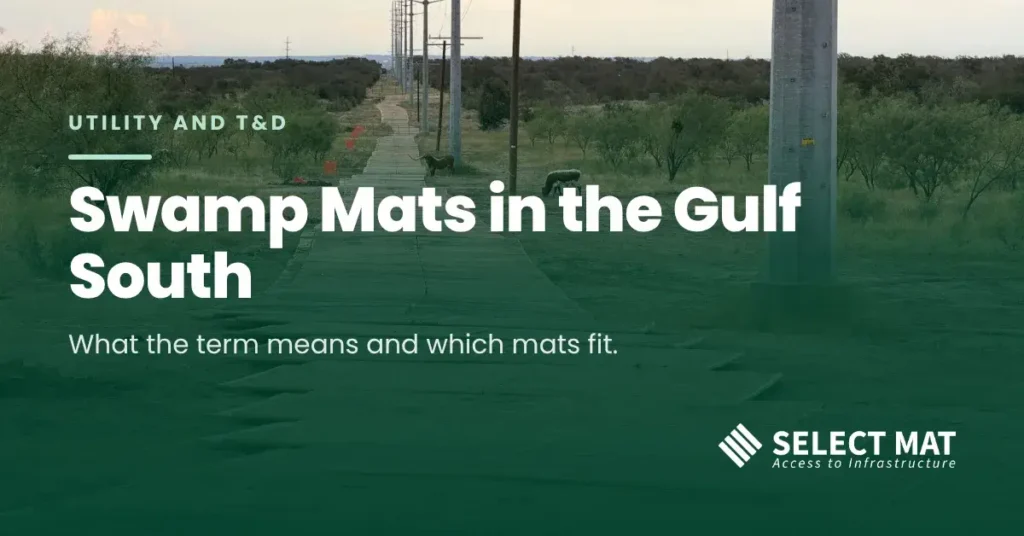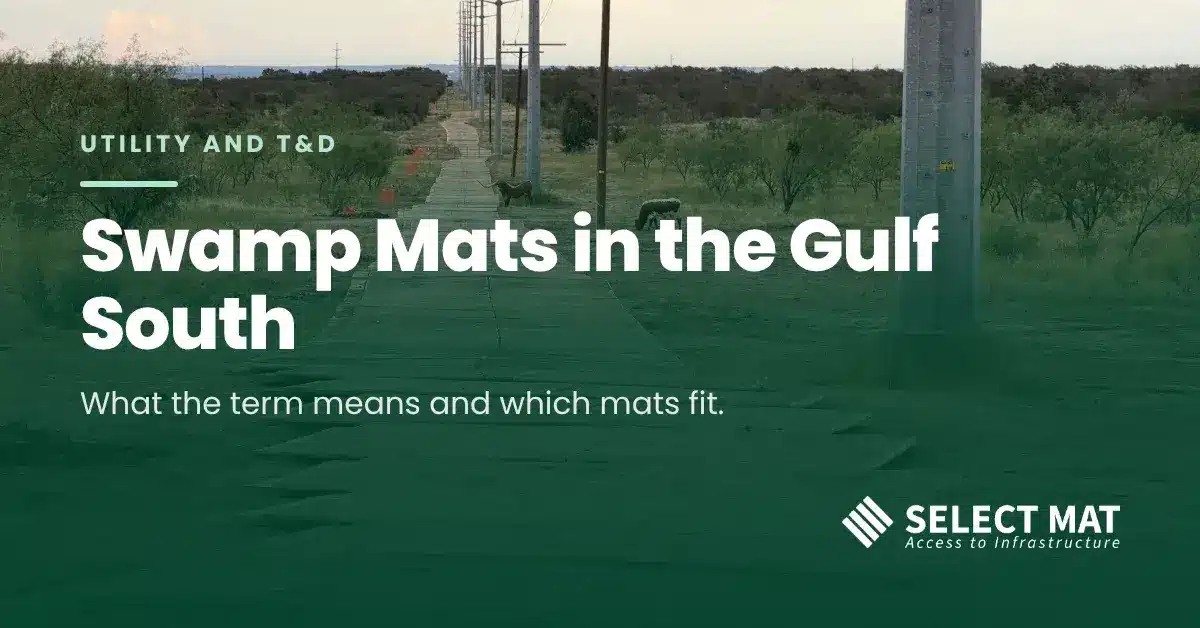
‘Swamp mats’ is a field term, not a single product. Crews use it for any mat laid over soft, wet ground so equipment can reach a work site, most often timber, laminated or composite mats. On utility and T&D jobs in the Gulf South, the right choice depends on how wet the ground is, the equipment crossing it, and how long the mats stay down.
What do people mean by ‘swamp mats’?
Ask five crews what a swamp mat is and you may get five answers. Some mean thick timber mats, some mean layered laminated mats, and some mean composite panels. What they share is the job: getting trucks, bucket trucks and heavy equipment across wet, soft or marshy ground without getting stuck or tearing up the site.
Because the term covers several products, it helps to start from the conditions and the equipment, then pick the mat.
Which mats fit wet, soft ground?
- Timber mats: 8 inches thick and built for heavy tracked equipment, strong and reliable in wet and rugged environments
- Composite mats: 4 inches thick, high-density polyethylene, the most versatile option for both tracked and rubber-tired equipment
- Laminated mats: three layers of hardwood, a cost-effective choice for rubber-tired vehicles on uneven ground
- CLT mats: three layers of pine with no gaps, for medium-duty access with rubber-tired vehicles, and about 40% lighter to haul
- Crane mats: 12 inches thick, for crane pads and the heaviest equipment, and as bridge mats to span trenches and waterways
How do I choose for a utility or T&D job?
Start with three questions:
- What is crossing the mats? Rubber-tired trucks can often use laminated or CLT mats. Tracked equipment points to timber or composite. Cranes and the heaviest loads need crane mats.
- How wet and soft is the ground? The softer it is, the more the mat has to spread the load, which can mean a heavier mat in the worst stretches.
- How long will the mats stay down? Short jobs favor renting. Projects of 6 to 18 months often cost less on a lease, which includes freight.
Why does it matter in the Gulf South?
Much of the Gulf South’s utility and T&D work sits on low, wet ground, and storm season adds washouts and flooding on top of it. Select Mat serves the region from locations in Texas and Louisiana, with same-day service in Texas, Louisiana and Mississippi.
Work in wetlands may also need a permit through the U.S. Army Corps of Engineers Regulatory Program, so confirm permit conditions before the swamp mats go down.
When weather hits, on-call crews are available 24 hours a day, 7 days a week. Recent emergency work includes hurricane recovery access, emergency pipeline repair crossings, and flood restoration and site stabilization for utilities.
Plan the site, not just the mat
On long right-of-way jobs, leapfrog staging keeps mats moving ahead of your equipment so you only cover the active work zone. When the job wraps, crews remove the matting and can help return the ground to its original condition, which matters on environmentally sensitive sites. We scope restoration with you up front so there are no surprises at demobilization.
Frequently Asked Questions
Is a swamp mat the same as a timber mat?
Not always. ‘Swamp mat’ is a field term for any mat used on soft, wet ground. It often means timber mats, but laminated and composite mats are used the same way.
Do you rent swamp mats for utility work?
Yes. Select Mat rents timber, composite, laminated, CLT and crane mats, and matches the mat to your ground conditions and equipment.
Can you respond to storm damage?
Yes. On-call crews are available 24/7 for washouts and weather-related failures. Call 1-800-SELECT-MAT.